Choquequirao Trek Quick Facts
Choquequirao is one of the best treks in Peru for travelers who want a remote Inca site, dramatic mountain scenery, and fewer crowds than Machu Picchu.
| Classic Duration | 4 to 5 days from Cusco |
|---|---|
| Difficulty | Challenging to strenuous |
| Choquequirao Elevation | About 3,033 m / 9,951 ft |
| Main Challenge | Steep descent and ascent through the Apurimac Canyon |
| Best Time | April to October |
| Permits | No limited trail permit; site entrance is required |
What Is Choquequirao?
Choquequirao, often translated as "Cradle of Gold," is a remote Inca archaeological complex in the Cusco region, located above the Apurimac River canyon. It is often called the sister city of Machu Picchu because of its Inca architecture, terraces, ceremonial spaces, and dramatic mountain setting.
Unlike Machu Picchu, Choquequirao cannot be reached by train or bus. Travelers must hike through a demanding canyon route, which is why the site receives far fewer visitors. For many hikers, that solitude is exactly what makes the experience special.
Why Travel to Choquequirao?
The Choquequirao Trek is ideal for travelers who want a real adventure, not just a photo stop. The route combines Inca history, remote campsites, canyon views, cloud forest, and a strong sense of discovery.
Fewer Crowds
Explore an important Inca site without the heavy traffic of more famous routes.
Real Trekking
A demanding trail for travelers who enjoy long hiking days and big elevation changes.
Inca History
Visit terraces, plazas, temples, water channels, and ceremonial sectors.
Apurimac Canyon
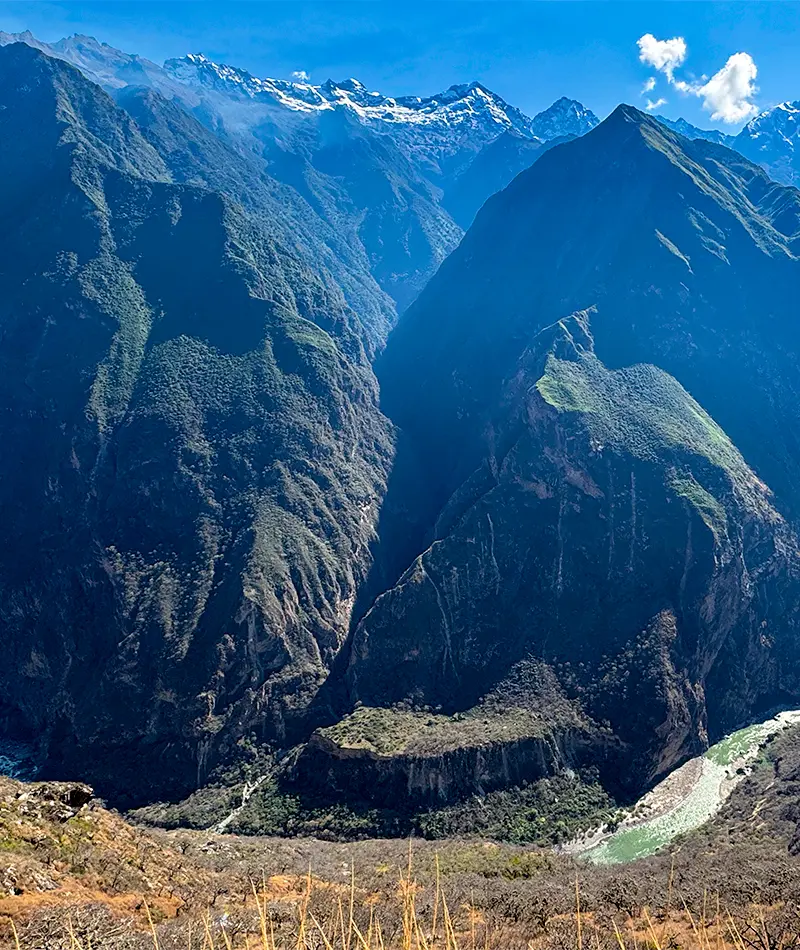
Hike through one of the most impressive canyon landscapes near Cusco.
How to Get to Choquequirao
The usual route starts in Cusco with a drive to the trailhead near Capuliyoc. From there, hikers descend into the Apurimac Canyon, cross the river, climb toward Marampata, and continue to the Choquequirao archaeological complex.
- Cusco to Capuliyoc: road transfer, usually 4 to 5 hours.
- Capuliyoc to canyon: long downhill section with open views.
- Canyon to Marampata: steep uphill climb and the hardest part for many hikers.
- Marampata to Choquequirao: scenic approach to the archaeological site.
Choquequirao Trek Routes and Itinerary Options
Travelers can choose between a classic round-trip trek and longer expeditions that continue toward Machu Picchu. The right option depends on your time, fitness, and appetite for remote trekking.
Classic 4-Day Choquequirao Trek
Best for active travelers with limited time who want to reach the site and return to Cusco.
- Day 1: Cusco - Capuliyoc - Chiquisca or Santa Rosa
- Day 2: Marampata - Choquequirao exploration
- Day 3: Return through Marampata and the canyon
- Day 4: Hike to Capuliyoc - drive to Cusco
5-Day Choquequirao to Machu Picchu Trek
A compact adventure that connects the remote Inca city of Choquequirao with Machu Picchu.
- Day 1: Cusco - Capuliyoc - Chiquisca - Santa Rosa
- Day 2: Santa Rosa - Marampata - Choquequirao
- Day 3: Choquequirao - San Juan Pass - Yanama
- Day 4: Yanama - Hydroelectric Station - Aguas Calientes
- Day 5: Aguas Calientes - Machu Picchu - Cusco
Longer Expedition: Choquequirao to Machu Picchu
Travelers with more time can also choose longer 7 to 9-day versions of the route. These expeditions are more remote, physically harder, and allow a slower pace through the mountains between Choquequirao and Machu Picchu.
Choquequirao Trek Difficulty
The Choquequirao Trek is considered challenging to strenuous. The trail is not technical climbing, but it includes long hiking days, steep downhill sections, steep uphill climbs, warm canyon temperatures, and remote conditions.
Usually 6 to 9 hours depending on the itinerary and campsite.
Major descent into the canyon and climb back toward Marampata.
Dusty, rocky, exposed, and uneven in several sections.
Fit hikers, active travelers, and people with previous multi-day hiking experience.
Permits, Entrance Tickets and Guides
Choquequirao does not require a limited trail permit like the Classic Inca Trail. However, travelers normally need an entrance ticket for the archaeological complex, and logistics must be planned carefully because the route is remote.
- Trail permit: no limited daily permit is currently required.
- Entrance fee: visitors usually pay to enter the archaeological site.
- Guide: strongly recommended for route safety, history, camps, meals, and mule support.
- Independent hiking: possible for experienced trekkers, but logistics are more demanding.
Best Time to Visit Choquequirao
The best time to hike the Choquequirao Trek is during the dry season, from April to October. May to September usually has clearer skies and more stable trail conditions.
| Season | What to Expect |
|---|---|
| April - October | Best overall season, clearer views, drier trails. |
| May - September | Most stable weather, colder nights, strong sun during the day. |
| November - March | Rainy season, muddy trails, higher risk of delays and slippery sections. |
Choquequirao Trek Packing List
Pack light but prepare for heat, cold nights, strong sun, dust, insects, and long hiking days. If you book a guided tour, camping equipment and meals are usually included.
Clothing and Footwear
- Broken-in hiking boots or trekking shoes
- Light hiking pants and breathable shirts
- Warm layer for camp and early mornings
- Rain jacket or poncho
- Sun hat, sunglasses, and extra socks
Essentials
- Passport or ID
- Sunscreen and insect repellent
- Reusable water bottle or hydration bladder
- Headlamp, power bank, and personal medication
- Trekking poles for steep descents and climbs
Costs and Trek Logistics
The total cost depends on the number of days, private or group service, transport, meals, camping equipment, guide, mule support, and whether you choose the classic route or a longer expedition.
What a guided tour usually includes
Round-trip transport from Cusco, professional guide, entrance tickets, camping equipment, meals, cook, muleteers, emergency support, and organized campsites.
Responsible Travel Tips
Choquequirao is still a remote and sensitive destination. Good trekking behavior helps protect the route, local communities, and the archaeological site.
- Carry out all trash and avoid single-use plastic when possible.
- Respect archaeological areas and never climb on fragile structures.
- Use local guides, muleteers, cooks, and community services when possible.
- Stay on marked trails to reduce erosion.
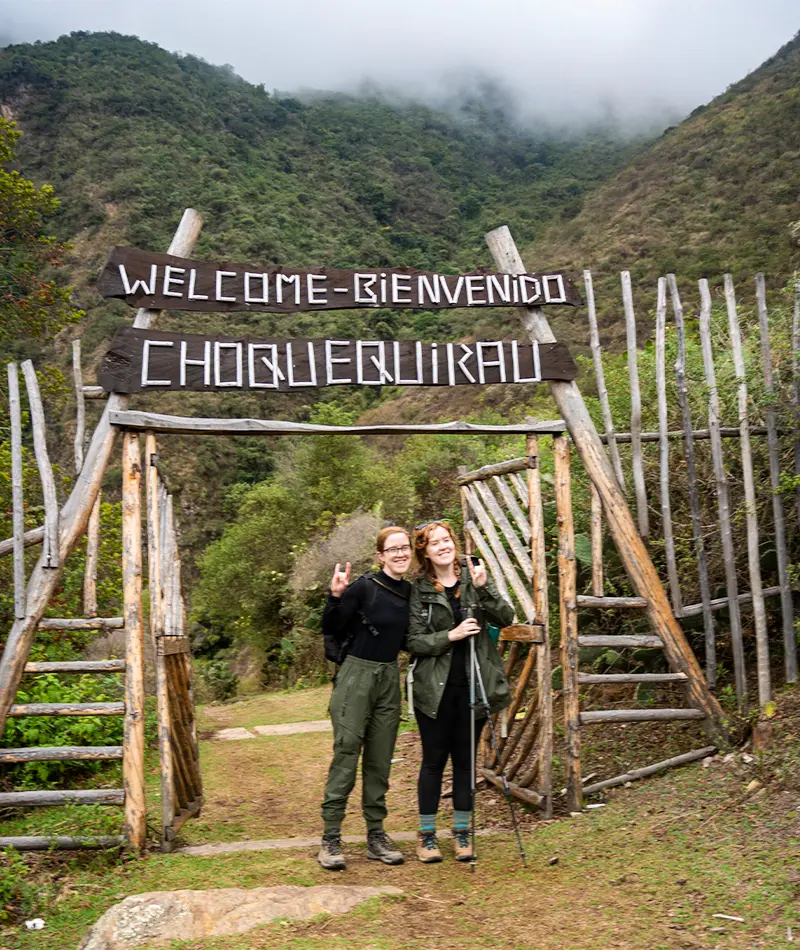
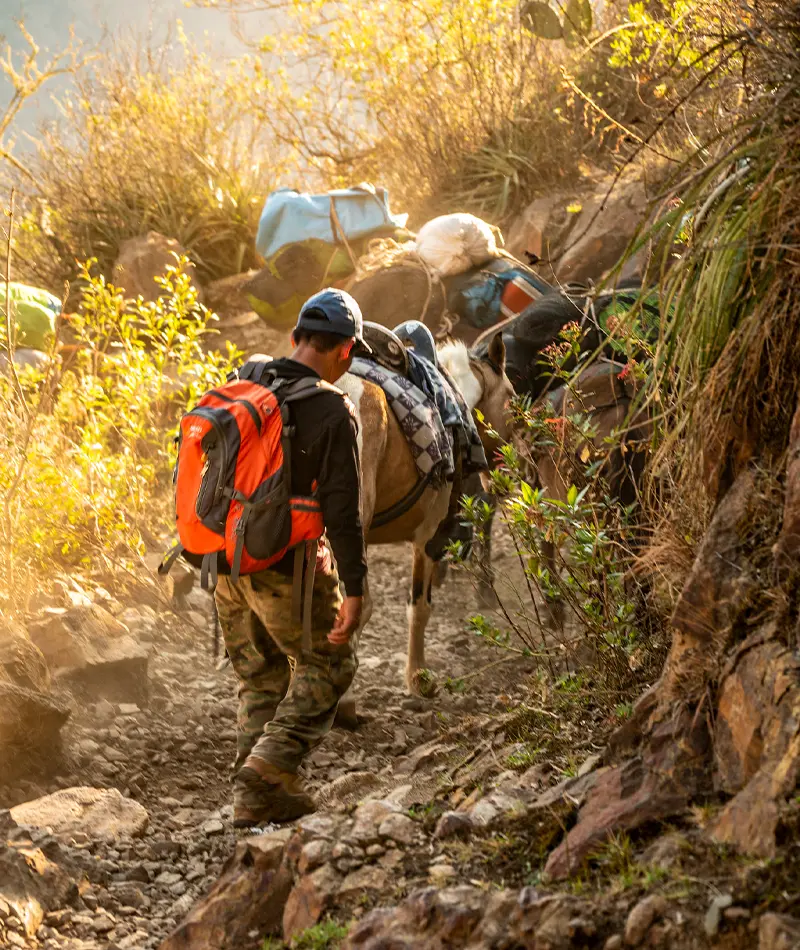
Choquequirao Trek Photos
Choquequirao Trek FAQs
Choquequirao Trek Tours
Choose a guided Choquequirao tour if you want transport, meals, camping equipment, entrance tickets, mule support, and a professional guide arranged for you.