

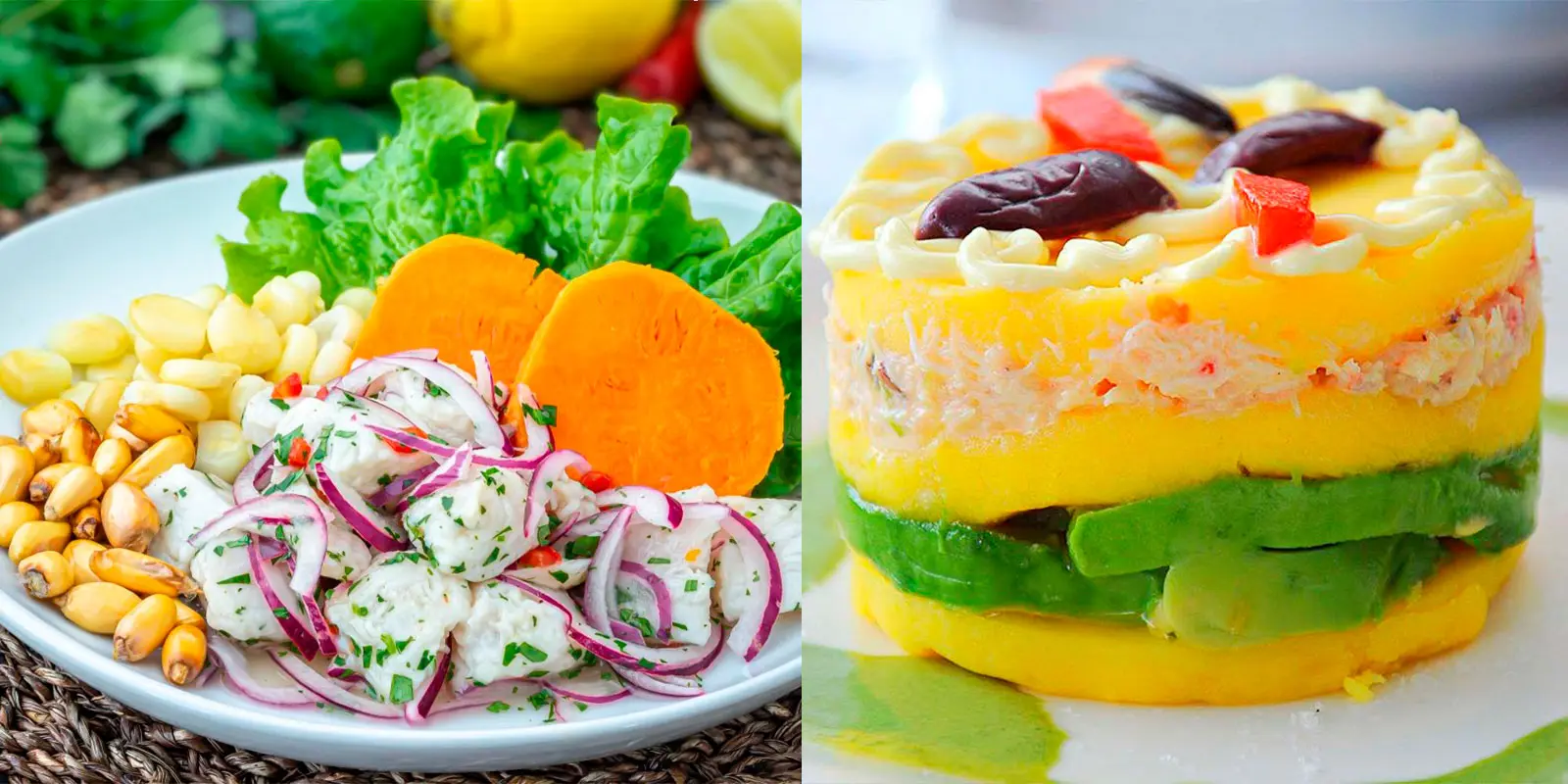
Peruvian cuisine is renowned for its diversity and rich flavors, drawing from a fusion of indigenous ingredients and influences from around the world. The coastal region of Peru, in particular, offers an array of delectable dishes that showcase the abundance of fresh seafood and the creativity of Peruvian culinary traditions. Let’s dive into some of the most iconic dishes from the Peruvian coast that you must try.
CEVICHE
Ceviche is the most famous traditional dish from the Peruvian coast known worldwide. It was declared a Cultural Heritage of the Nation in 2004, and since 2008, “National Ceviche Day” has been celebrated.
While it is true that this dish is prepared in many countries around the world, Peru has a very simple and explosively flavorful formula. This dish includes ingredients such as fish, lemon, chili, onion, cilantro, salt, and pepper. All these ingredients are mixed in a bowl and left to rest for about 20 minutes until they are ready to be enjoyed.
Although there are several versions of its origin, it is said to be a dish from the pre-Columbian era, and with the arrival of the Spanish, lemon and onion were added.
LOMO SALTADO
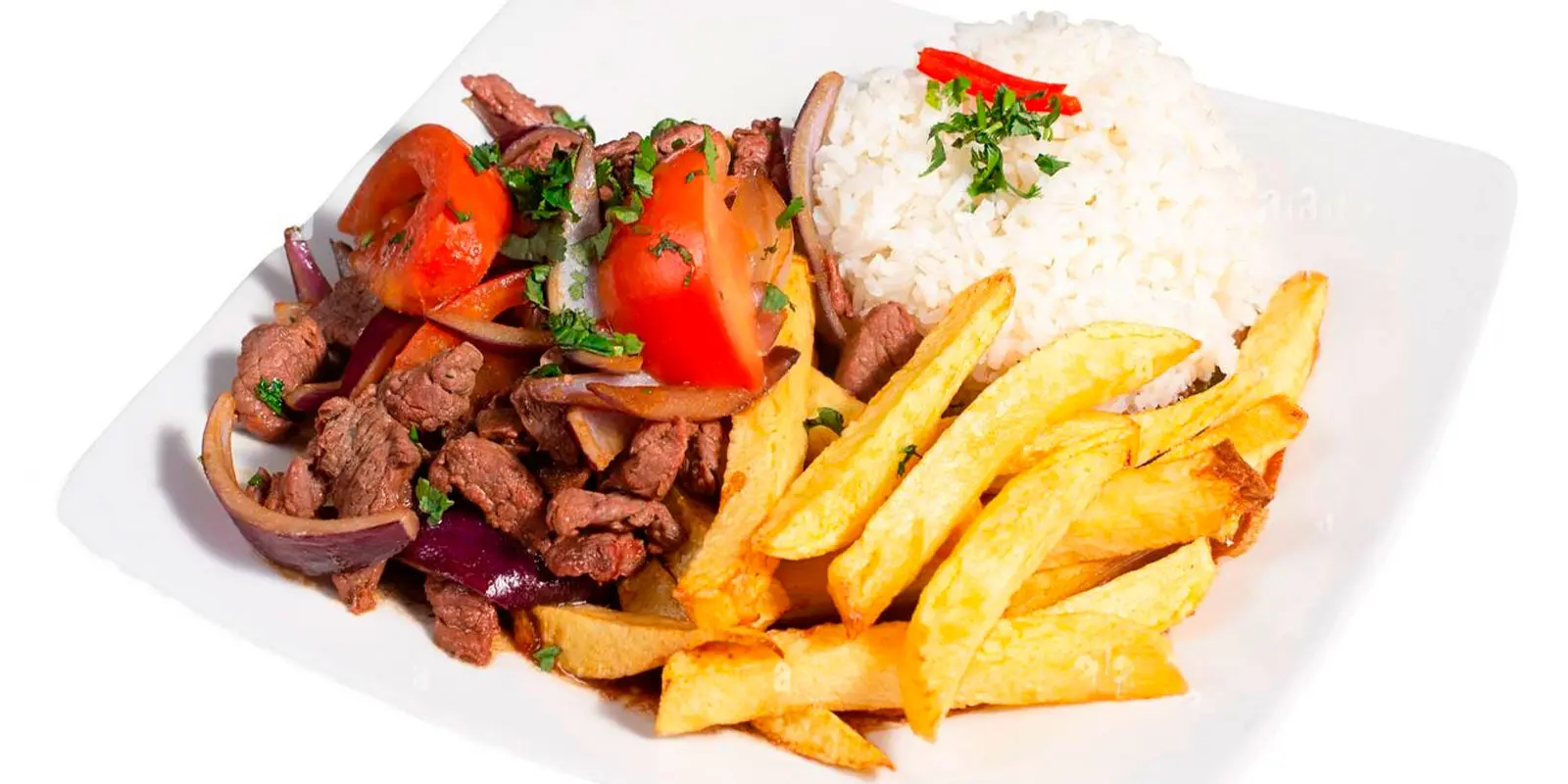
Lomo saltado is the most famous and sought-after Creole dish by thousands of tourists. It can be found in any restaurant and picantería in Peru, but the best lomo saltado is found in Lima.
Lomo saltado is a dish that originated at the end of the 19th century. Its preparation is simple, but its flavor is unparalleled. It consists of stir-frying beef tenderloin pieces with vegetables, yellow chili, and soy sauce, onions, and tomatoes in a wok.
In the end, it is served with rice and French fries. Are you ready to enjoy it?
ANTICUCHO
Anticucho is a type of skewer of Peruvian origin that is also popular in some South American countries with different variations. It consists of meat and other foods grilled on a skewer. During the pre-Columbian era, anticucho was made with pieces of llama meat and seasoned with aromatic herbs and chili. Other versions indicate that the dish results from the interaction between Moorish and Hispanic traditions that arrived in Peru with the conquest, with preparations based on goat meat and heart in the Maghreb region, demonstrating the great Spanish tradition of making full use of the cattle (including its offal).
Although its origin would date back to the pre-Columbian era, anticucho became popular during the colonial era, being one of the most important dishes served to the slaves of the former Viceroyalty of Peru and regularly consumed by the descendants of the first encomenderos.
In Peru, anticucho is characterized by using beef heart and is mainly consumed during October as part of the gastronomic traditions of the Señor de los Milagros festivities.
The term anticucho is found in Peru, so it is suggested that it comes from Quechua. According to anthropologist and botanist Fernando Cabieses and some texts from the archives of the National Library of Peru, the term comes from Quechua ‘antikuchu.’
Thus, Anticucho gained shine and flavor. So much so that the famous Peruvian writer Ricardo Palma mentioned this dish in his work ‘Peruvian Traditions,’ where he describes it as a “steak on a stick” and highlights its high demand always at 3 in the afternoon.
Anticucho became so popular that nowadays it is very common to find a smoking cart in every district of the capital, around which diners clamor for their respective portion on sticks. Moreover, in many parts of the world, Peruvian colonies organize to enjoy it, as do several prestigious restaurants.
Easy Preparation: To enjoy this dish, first, the beef heart must be cleaned and all nerves, veins, and fat removed. Then, it is cut into small pieces and placed in a dish. Here, it is seasoned with garlic, cumin, chili, vinegar, salt, and pepper, and left to marinate for at least 12 hours in the refrigerator. Finally, each piece is skewered and fried on a grill. Once browned, they are removed and served with potatoes and Andean corn.
CAUSA LIMEÑA
Causa Limeña is one of Peru’s traditional dishes, consumed before the arrival of the Spanish in the Americas.
It is a cold preparation made from white and yellow potatoes (native to Peru), adding olives, onions, boiled eggs, and a tablespoon of yellow chili. It should be seasoned with oil, lemon, and salt to taste. To decorate this delicious dish, some place an olive on top of the causa and enjoy its incredible flavor.
It is believed that the name ‘causa’ comes from the Quechua word ‘kausay,’ meaning “giver of life.”
AJÍ DE GALLINA
Ají de gallina is one of the most famous dishes in Peru. This dish is not only delicious but also easy to prepare, making it a favorite of many. It arrived in Peru with the Spanish and over time, evolved into what it is today.
It is comfort food for many tourists. It could be said that ají de gallina is shredded chicken stew, cooked with ground walnuts. Then, this broth is added to a sauté of garlic, onion, Parmesan cheese, bread, and yellow chili, where it finishes cooking.
It is served on a base of boiled potatoes and white rice. It is also accompanied by olives and boiled eggs.
This dish is also found in various regions of Peru, although it is said that those who prepare it best are in Lima. Have you tried it yet?
CARAPULCRA WITH SOPA SECA
Carapulcra is one of the oldest dishes, originating from the city of Chincha, located in the central-southern part of Peru. It mainly consists of the union of two traditional dishes, carapulcra and sopa seca.
Originally prepared with llama or alpaca meat, it is now cooked with pork or chicken.
In a pan with plenty of oil, place onion, red chili, and ground garlic. As soon as the onion is well browned, add the pork (previously fried), a pinch of cumin, and a bit of black pepper.
When the pork is ready, add previously toasted and soaked dried potatoes, a little meat broth, and a glass of red wine. Finally, toasted and ground peanuts are added, and it is served with yucca or white rice and some parsley to taste.
CHUPE DE CAMARONES
Chupe de Camarones is a traditional dish from the Peruvian coast. It is a typical Peruvian dish from the city of Arequipa and is served in all the picanterías of the city.
It is a thick and spicy soup with ingredients such as river shrimp, yellow potatoes, fresh cheese, milk, beans, peas, corn, rice, and eggs, as well as a dressing made from red bell pepper and huacatay.
Besides being widespread in Callao and Lima, it is also prepared throughout the country. Enjoy it as you prefer.
PICANTE DE MARISCOS
Picante de Mariscos is for those who prefer a spicy dish with seafood. This dish is very fresh, light, and easy to prepare. A stir-fry of red chili, green chili, onion, pepper, salt, and cumin should be prepared.
Then, add octopus, crab meat, and potatoes, seasoned with rocoto to taste, parsley, and cilantro.
SECO DE CABRITO
Seco de Cabrito is one of the most traditional dishes from the northern coast of Peru. Its origin comes from Arab culture and was brought by the Spanish when they arrived in America, where it transformed into a typical dish of the Peruvian coast.
The kid goat is cooked in the form of a stew or casserole, along with onion, chili, garlic, and cilantro, usually accompanied by beans, rice, and yucca.
This type of dish is generally used for special occasions or celebrations, such as birthdays or weddings.
TACU TACU
According to history, tacu tacu was created by the communities of African slaves brought to America for physical labor.
Initially, tacu tacu was considered a reheated dish consumed for breakfast, made by mixing rice with leftovers from the previous day and yellow chili.
Today, it is often served at lunch with a portion of meat and an egg.
TALLARINES VERDES
In Peru, green noodles are usually used to accompany some type of meat, although they are also consumed alone.
Although noodles are of Italian origin, when they arrived in Peru, their ingredients were replaced by those found in the coastal areas of the Latin American country.
For its preparation, pasta is cooked, preferably noodles, and a sauce made from basil, spinach, evaporated milk, pecan nuts, and Parmesan cheese is added. The basil gives it a very characteristic fresh flavor.
CHANCHO AL PALO (pork on the stick)
Chancho al Palo is delicious, democratic, and its consumption has risen exponentially in the last decade. Where does it originate, why has it become so famous, and how can we enjoy it during the pandemic?
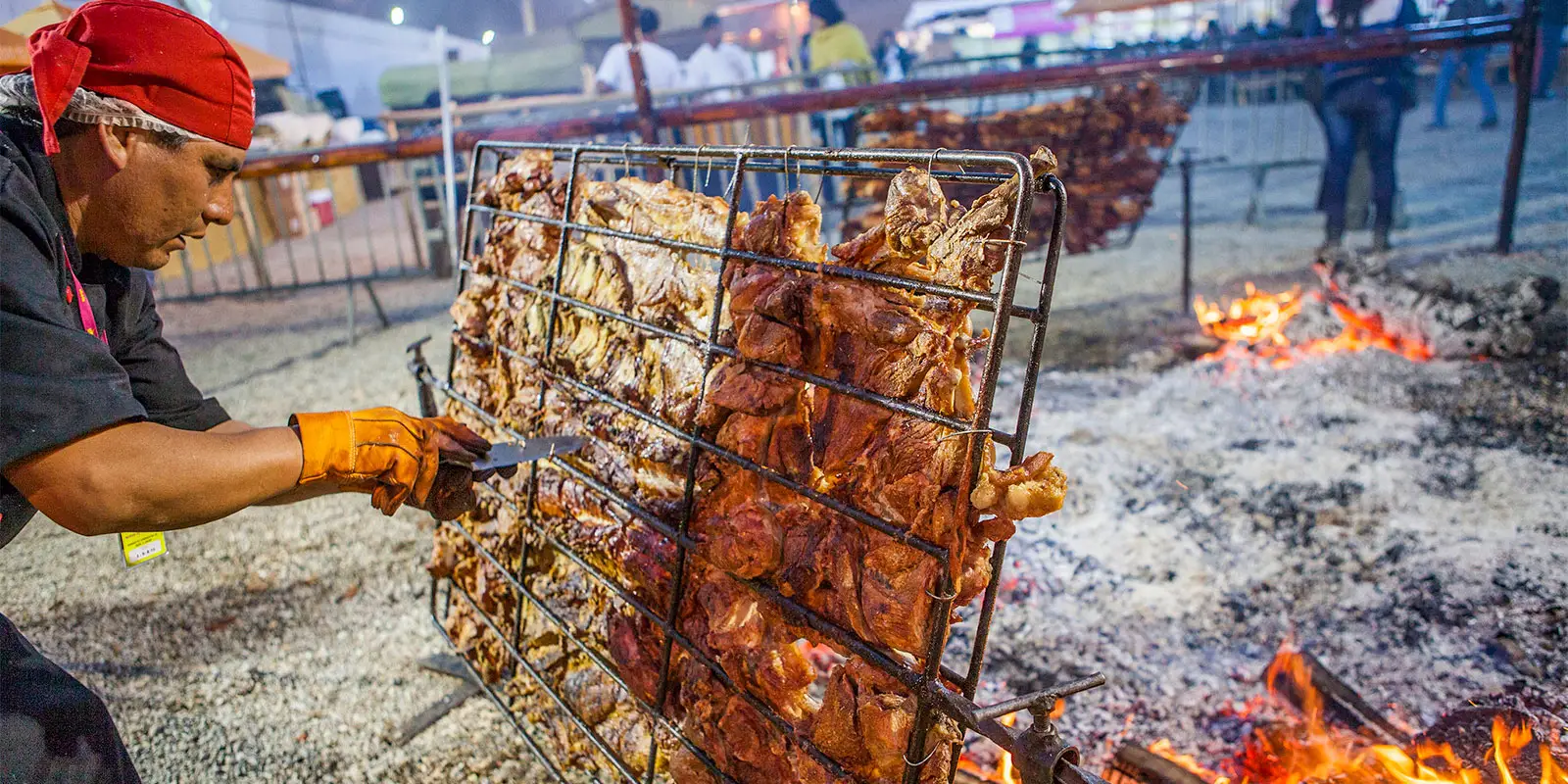
Chancho al Palo has become as popular as ceviche or lomo saltado. It is already a symbol of Peruvian identity and could be considered the latest flagship dish to enter our recipe books. Its origin dates back to the northern region, specifically to the Huaral area, during the 1980s. The open spaces and abundant firewood favored the spread of these establishments.
Many attribute its preparation to two brothers, Carlos and Roberto Ramírez, both passionate about Peruvian cuisine. The Ramírez brothers were known for cooking the pork differently: that is, with racks designed to press the meat between both ends, which is then grilled over a wood fire. With their proposal, they rose to fame and made this delicious dish more popular among locals and visitors.
Today, many restaurants prepare this dish in various places in Lima and Peru. Among them is Pepe Warmy, located in the province of Huaral, who was one of the most awarded chefs at Mistura. This earned him the title: “the king of chancho al palo.” His example serves as inspiration for many entrepreneurs.
