

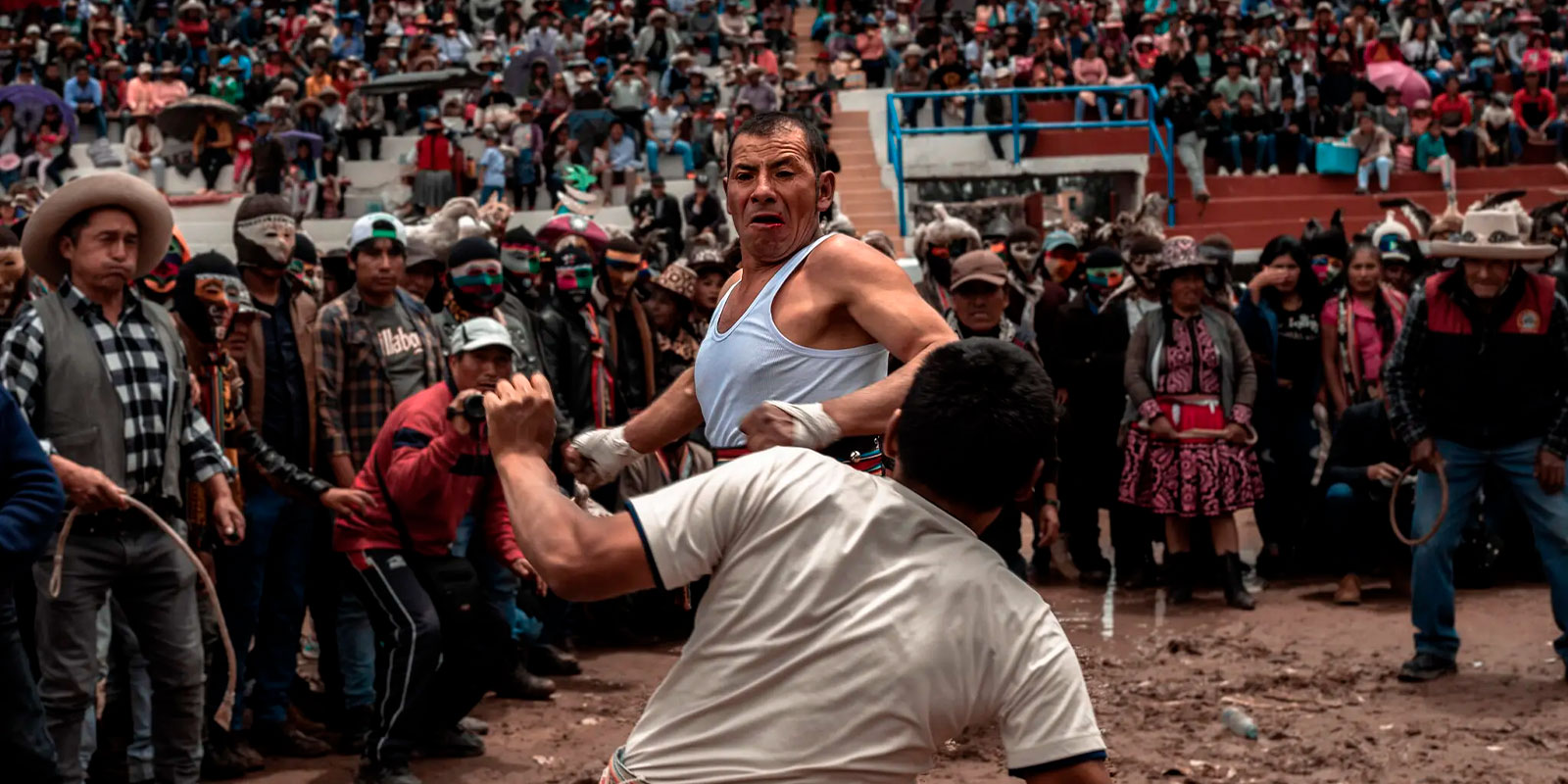
Takanakuy is a traditional festival that takes place in some communities in the Andean region of Peru, specifically in the province of Chumbivilcas in the Cusco region. This event is celebrated every December 25, coinciding with Christmas.
What is Takanakuy?
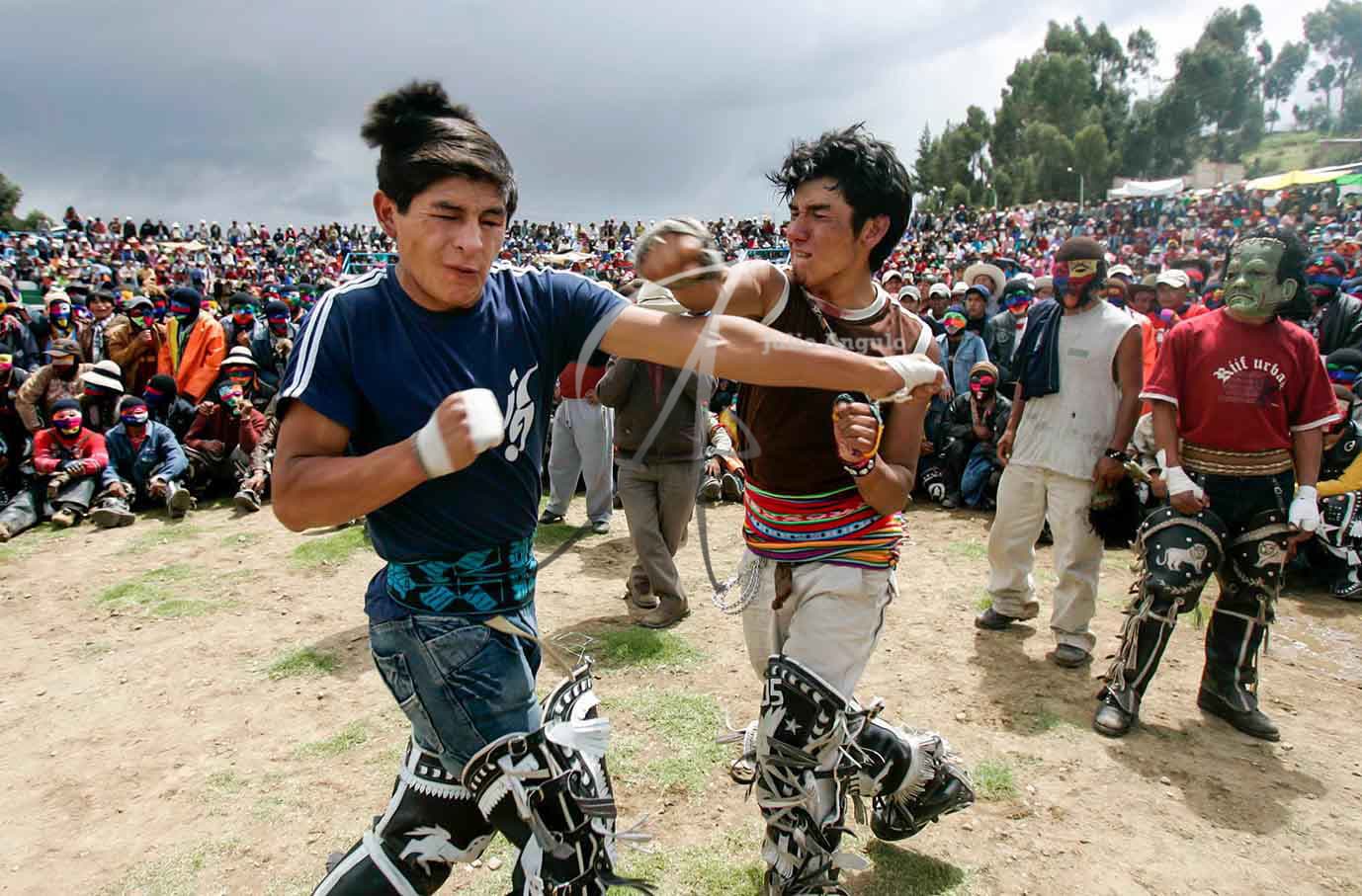
Every year, in the Andean region of Peru, particularly in the province of Chumbivilcas in Cusco, a unique festival takes place: Takanakuy. This Quechua word means “to hit each other” and perfectly captures the essence of this tradition, where participants engage in ritual fights.
What is the origin of the Takanakuy tradition?
Takanakuy dates back to colonial times, when the Spanish forced slaves to fight among themselves just for fun every December 25, Christmas Day.
After this time of Spanish rule, Takanakuy merged with Huaylía, which consists of songs and dances of Inca resistance. In this way this custom was strengthened and transformed into a mechanism to resolve conflicts and keep the warrior spirit alive.
The residents of Santo Tomás perform Takanakuy since before Christmas is established, which is a Western tradition. For many years the town was forgotten by the judicial and police authorities. Therefore, from that moment on, Takanakuy is used to solve problems.
Takanakuy in Popular Culture
In recent years, Takanakuy has attracted international attention. Documentaries, reports, and articles have explored this fascinating tradition, helping to spread knowledge of it beyond Peruvian borders. However, it is important to remember that, while it may be a spectacle for outsiders, for the people of Chumbivilcas, it is a vital part of their identity and cultural heritage.
–Important–
Santo Tomás is located at a distance of seven hours from Cusco. With a height of 3,481 meters above sea level. Its more than 24,492 inhabitants are mainly dedicated to commerce, livestock and mining activities.
